Our philosophy at Core Creative Education (CoRE), is to work on the fundamental needs of a child, helping them to re-engage with their passions and interests and access wider opportunities.
Student experience
Each young person is paired with a mentor for the morning and a different mentor in the afternoon. This ensures a rich and diverse experience for each student. At CoRE our team believe in:
- Establishing a rapport with a child.
- Accepting a child exactly as they are.
- Enabling a child to express their feelings.
- Maintaining respect for the child’s ability to solve their own problems.
- Working with clear boundaries but facilitating the child’s journey.
- A child’s therapeutic journey being a gradual process, led by the child.
- Young people’s progression and views being fed into all meetings around the child.
Student voices
“I feel happy, excited and proud” “I feel refreshed and happy at the end of the day”
“I feel happy, I feel I have achieved” “I feel 10, I really really love it here”
Who can access CoRE’s Mentoring Programme
- CoRE works in partnership with schools, families and other professionals and services around the child.
- All referrers are professionals working for Somerset, Dorset or Devon Council schools or SEND departments, who set targets to support student SEMH towards re-engagement.
- CoRE is not OFSTED registered and works in partnership with 25 different schools.
- All students are registered with a school or college
- All students have an Education Health Care Plan (EHCP)
- Young people, 7-18 years, can attend CoRE for a minimum of 1 day to maximum 3 days a week.
- Our students often have neurodiversity, early childhood trauma or attachment difficulties manifesting in behaviour issues and disengagement.
Student learning, targets and SEMH strategies
- Each student has a bespoke, integrated, sensory and therapeutic programme
- CoRE deliver therapeutic play and choice driven activities to develop students’ mental, physical, social and emotional health.
- Outdoor therapeutic experiences form the main part of students’ experience, exploring regulation strategies developed through a connection with the natural world alongside the animals living at the Centre. The animals are an integral part of the therapeutic team.
- Therefore CoRE does not work with a curriculum. Each students’ timetable is bespoke. All learning experiences are recorded and are chosen to develop their SEMH eg. maths games, experiential science projects, discussion, debates, environmental science themes, history topics, art experientials, drama role play, music play.
- We enable students to develop a sense of self, by addressing issues with emotional wellbeing, developing confidence and self-esteem through achievable tasks including problem solving and skills to build resilience.
Measuring progress for students
- Students are set 2-3 targets each term that directly relate to their SEMH. These are updated once achieved and collated in the end of term report or as required.
- Students keep a portfolio of their interests and ideas, some of these develop into ASDAN portfolios and are internally assessed.
- Thrive and SDQ assessment toolkits are used where necessary to illustrate progression.
Please see code of conduct/ behaviour policy in Policies and Procedures. What students need for the day
- A packed lunch, drink and snacks.
- Robust shoes or wellies and clothes that can get dirty or muddy. For younger students a spare set of clothes and socks is also required.
- For any medication that is required to be taken during the CoRE day. A medical form will be provided.
Quality Assurance of our staff team:
All staff at CoRE are:
- Qualified as SEMH practitioners with Somerset Youth UK
- Trained in PACE (see below)
- Trained in THRIVE (see below)
- Trained in the neuroscience of child development
- Trained in the benefits of Ecotherapy
- Trained in the Benefits of Therapeutic Play
- Are part of Dorset Councils single central record and have enhanced DBS
- Hold up to date Safeguarding L2 or L3 qualification
- Are covered by CoRE’s Employee and Public Liability insurance
- Have access to a fortnightly peer support group and access to regular supervision
- First Aid
Advocacy
CoRE provides advice and support to families, schools and other professionals looking to understand the SEND journey, helping them to navigate through the process of accessing therapeutic mental health support.
Assessment and Reporting
CoRE’s robust reporting structures provide the tools to collate information recorded by the mentoring team about that child eg. their passions and skills, their preferred learning environment, how they interact with others, behaviours and social interactions. These reports enable professionals like teachers, social workers, educational psychologists and occupational therapists to understand the needs of the child, enabling them to find the best packages of funding and support.
Robust reporting package includes:
- CoRE’s toolkit of qualitative observation by mentors on learning, communication, relationships and behaviour.
- Thrive toolkits, producing graphs demonstrating change over time.
- Quantitative data from Goodman’s SDQ scoring. Its use is commended by Ofsted, used widely by paediatricians, therapists and CAMHS.
What is PACE?
PACE stands for Playfulness, Acceptance, Curiosity and Empathy. Our staff use this as a tool to build trust and connection with young people that are referred to CoRE.
The Thrive approach
At CoRE, our staff are trained in the Thrive approach, a dynamic, developmental, trauma-sensitive approach to meeting the emotional and social developmental needs of children and young people. It is informed by recent developments in neuroscience research and is underpinned by a theoretical base in child development theory, attachment theory and research into creativity, play and the arts. Central to the effectiveness of Thrive is the online assessment, action-planning and measurement tool, equipping supporting adults with the ability to support right-time emotional development, as well as to provide suggested reparative interventions. ‘Significant interruptions – particularly at Being, Doing and Thinking, result in a poorly developed stress-regulation system. This tends to manifest in a general lack of emotional resilience and difficulties with relationships…mental health issues such as anxiety, depression, self harm, explosive and violent relationships’. (Let’s help every child Thrive, 2022) 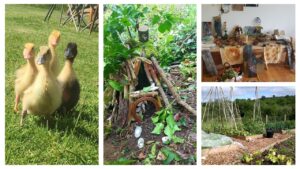 For more information on the activities we can offer as part of the mentoring programme, please click here.
You must be logged in to post a comment.